Media & Makten
Lämna ett svar

The question about how to handle issues of integration is discussed widely throughout Europe. In general debates concerning immigration and integration policies, Sweden tends to compare itself with Denmark. The common impression is that Denmark has a far too rigid take on integration issues and that they are hostile towards foreigners. The Danes, however, accuse the Swedes of being afraid of addressing the problems and keeping quiet due to political correctness. We found that these ideas are widespread, but few studies actually look at how issues of integration are taken on in the two countries, especially in media research.
The purpose of the project is to investigate possible changes in the Swedish evening press and their way of reporting. In this case we have chosen the two biggest evening newspapers Aftonbladet och Expressen. To do so we choose to look at two of Sweden´s most media covered events in later years, the infamous ”Lasermannen”. Lasermannen or John Ausonius acted during the years 1991-92 in Stockholm. He became an almost mythical person that injured ten people and killed one person before the police arrested him. The other case is similar in many ways to that of Lasermannen but took place in Malmö. In 2010 a single offender, in media called ”Malmöskytten”, shoots a number of people based on their ethnical origin.
This study strives to describe and analyze how Swedish press portraits pedophiles and child molesters and what possible effect this image could have. It also seeks to show how this image compares to ”reality”. We have analyzed the four major newspapers in Sweden during the year 2010 and interviewed experts, journalists, victims, pedophiles and a news editor.
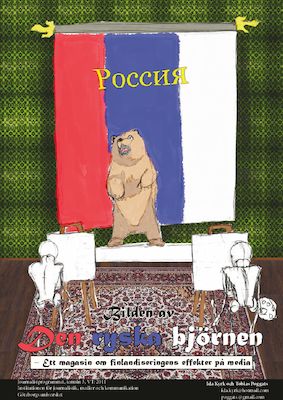
During the 70´s the Soviet Union had a strong political influence on its neighbouring country Finland. Finland was cautious not to upset the Soviet which could be seen in Finland´s politics and their efforts not to side with either east or west. Leaders in Finland could not sentence newspaper publishers for writing things that could damage the Soviet-Finnish relatons, but they could exercise influence in other ways – talking to the publisher informally, and urging them not to write about sensitive topics for example. The effect that the Soviet Union had on Finland during this time has later been formed as a theory, and it describes how strong countries can coerce weaker countries to do as they want.
The purpose of this project is to examine the government authorities and their frequency in the public debate. In 2006 the authorities were criticised by politicians and political scientists for being too active and having too much influence on the public opinion. Since the political right-wing won the elections in 2006, several authorities have been closed down and their spreading of opinion should be investigated. There are reasons to believe that the authorities have been less active in the public room since 2006.
Commercialization vs Journalistic ideals This report was conducted in order to investigate if Swedish journalists feel that they have to compromise with their ideals due to an increased commercialization of the media market, and if they have seen any change over time.
Title: ”Jack-in-the-box” – the mediatized politics Everybody thinks that media gets more power and that politicians play by rules set up by the media and that society has adapted to this. We think that mediatization has become a part of the society. Have politics and politicians become more mediatized?
Purpose: Our aim is to research the commercial situation for the small magazines in Sweden. Question: What is the condition regarding distribution? What is the condition regarding their market and economy? What is their relationship to the advertisers? How do they market themselves?
The main purpose of the study was to examine how dictatorships and partly free countries are presented in Swedish travel magazines during 2010 and the beginning of 2011. Questions that we have sought answers to are: How much information about the political situation do we get from the articles about the concerned countries? Do they mention anything about human rights? Does the social situation get any attention? If the articles doesn´t mention any of the factors above, what do they mention? In what way do you compromise with the journalistic ideals when writing about travels? We have also taken a look at how the inhabitants of the concerned countries are presented and whether or not they get to have their say.