Kategoriarkiv: Journalistikgranskning

thumbnail of kv10-5-4

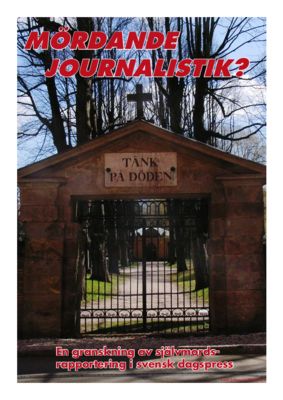
Mördande journalistik?

Suicide is a controversial subject when it comes to media reporting in Sweden. Often journalists tend to avoid the subject out of fear of spawning more suicides among its audience. The notion that giving attention to suicides in media will spawn even more suicides is called the werther effect. Recently we have seen a change in trend in Swedish media when it comes to suicide. The last ten years the media has started to give more attention to suicide cases than before. Often the reports are focused on celebrity suicides, but even specific suicides committed by commoners have seen its share of attention. In this work, the authors are investigating this new trend in Swedish media reporting. More specifically this study is committed to investigating how journalists report when it comes to suicide. In parallel to this, the study also tries to investigate whether there is any substance in fearing the werther effect.
SMEDJA i MEDIA

Think Tanks in the Daily Press is an overview of the Swedish market of think tanks (or ”tankesmedjor”, ”thought forges”), primarily advocacy think tanks with an ideological mission, and how they use the daily press to influence the political climate. The study is comprised of a qualitative content analysis of three of Sweden´s biggest and most influential daily papers: Svenska Dagbladet, Dagens Nyheter and Aftonbladet, over a time span of 10 years, 10 months and 10 days (2001-01-01 – 2010-10-10). The analysis focuses on ”viewpoint space” and the presence of ”competitive viewpoints” in a total of 928 articles where think tanks can be said to express a viewpoint based on the ideological or political views around which the think tank operates. The quantitative study is accompanied by a series of interviews: CEO:s at some of the leading Swedish think tanks, the editors of op-ed pages in the newspapers of the content analysis, the news editors, and scientists in the fields of Media and Political Science all give their view on how the think tanks operate in the daily press: How it has changed since the year 2000 and how the think tanks are likely to operate in the 10 years to come. The study also includes a historical overview of think tanks and the Swedish related term ”tankesmedja”, as well as problematization of the use of the Swedish word in relation to its American origin. Purpose: To get an overview of which attitudes towards Swedish advocacy think tanks that are present in editorial offices, and on the other hand, how the think tanks work in correlation with these offices.

thumbnail of kv10-6-4

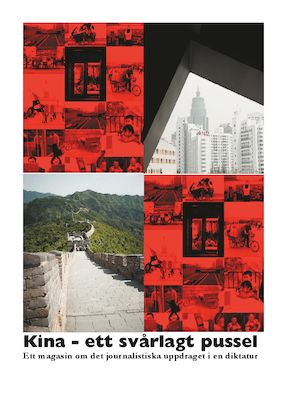
Kina – ett svårlagt pussel

The aim of this paper is to find out how the six largest Swedish newspapers depict China. It also looks at how Swedish journalists and newspaper editors define their democratic responsibilities as journalists, and whether they fulfill the ideals and responsibilities that are part of the idea of journalism as an important part of democracy, for example scrutinizing of those in power and explanation of complicated events to the public. The paper aims to answer three questions: What are the responsibilities of the Swedish media when reporting from China? What is the image of China in Swedish newspapers? Do the Swedish journalists fulfill their democratic responsibilities when reporting from China?

thumbnail of kv11-4_0-3

Mannen som satte skräck i en stad

Purpose: In this study we aim to study how two newspapers – Nerikes Allehanda and Aftonbladet, have chosen to portrait Sweden´s worst serial rapist, Niklas Eliasson. We are interested in conceiving explanations as to why the reporting comes across the way it does. What consequences could it have? To be able to answer this, we intend to proceed from a series of fundamental questions: – What deliberations were taken into consideration, while writing the articles? – How do the journalists regard their articles and the portrayal of Niklas Eliasson? – Why was he portrayed the way he was? – How do the experts and police look upon the portrayal? – How is Niklas Eliasson portrayed in the media (in this case Aftonbladet and Nerikes Allehanda?) – Does the media´s portrayal have any stereotyping effects of the perpetrator?

thumbnail of kv10-7-4

GAME OVER

Aim Our aim is to shed light on a relatively new field of journalism: e-sports and see how it is being treated by three Swedish newspapers. Main questions What attributes gets pinned on to e-sports and how is people involved with e-sports described in articles? What are three of the biggest Swedish newspapers reporting about e-sports and gaming culture? How is their content different to online e-sportsites? How is the e-sportplayer pictured in traditional press?

thumbnail of kh09-12-3

Journalistiken är nu i ett förhållande med Sociala Medier

Journalism is now in a relationship with: Social Media To compare how Svenska Dagbladet in Stockholm, Sweden and StarLedger in New Jersey, USA use social media in their journalistic work. We also want to see how social media affects journalism. We used participation studies and interviews. When studying new phenomena, such as the development of social media, participation studies is a preferable method. Interviews further deepend our insight in the subject.

thumbnail of kh09-13-3

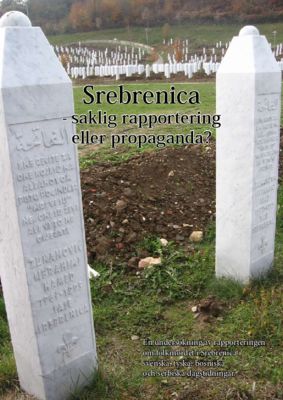
Srebrenica

The Bosnian war (1992-1995) was an exceptionally gruesome conflict for journalists. The conditions under which war reporters and war correspondents worked must have made a certain influence on the information they later presented to the public. In order to acquire a better understanding of this problem we chose to concentrate on the Srebrenica genocide. In July 1995 the Bosnian Serbian army, originally a fraction of the army of Yugoslavia, marched into Srebrenica, a small town in eastern Bosnia. The town was occupied by them two years earlier and had since then been a UN safety zone. In spite of that, the Bosnian Serbian army and paramilitaries committed the act of genocide: they separated the men from the women and children and killed them in secret. The women, children and the elderly have been transported out of what then became the Serbian territory.

thumbnail of kh09-15-3

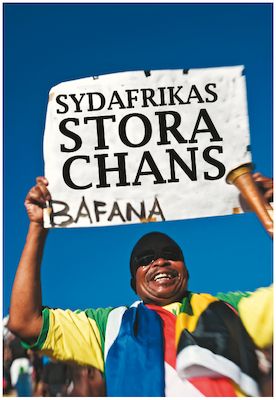
SYDAFRIKAS STORA CHANS

Purpose: To study how the South African government through a free media-service tries to influence what foreign journalists write about the country next year during the first Soccer World Cup ever on African soil. Our purpose is also to find out the views of Swedish correspondents based in Johannesburg on how the World Cup next year can effect the reporting from South Africa.